

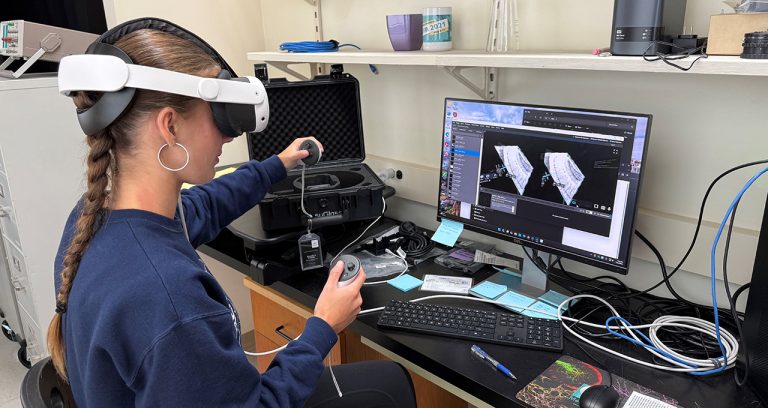
At the Marine Biological Laboratory (MBL) in Woods Hole, Massachusetts, researchers are investigating the molecular mechanisms behind human memory. By leveraging cutting-edge technology from NVIDIA and HP, along with virtual-reality (VR) platforms, the team is uncovering the intricacies of how memory functions in the brain.
Memory: More Than Just a Brain Trace
Plato’s writings suggested that when humans experience something, it triggers a change in the brain that is powered by memory. This idea is central to the Marine Biological Laboratory’s research. Andre Fenton from New York University and Abhishek Kumar from the University of Wisconsin–Madison are leading the project to understand memory. The goal is not only to look at memory as a past trace in the brain but also as an estimate of the future the brain predicts.
“My life’s work is to understand how minds operate, and especially to understand memory,” Fenton said. “Memory is not merely a trace of the past, but an estimate of the future that the brain is afforded.”
AI and VR Powering Memory Research
The Marine Biological Laboratory has enhanced its research by incorporating powerful tools like NVIDIA RTX GPUs and HP Z Workstations. These technologies allow the researchers to visualize and analyze large datasets efficiently. Along with syGlass, a VR platform for scientific exploration, the team can now interact with the data in ways that were previously not possible.
This initiative is supported by grants from the National Institute of Mental Health and the Chan Zuckerberg Initiative, enabling the team to dive deeper into the mysteries of memory and its role in brain diseases.
A Neural Forest Uncovered
Fenton and his team are focused on the hippocampus, the brain’s memory center. This seahorse-shaped structure is central to memory, and Fenton describes the hippocampus as a “forest” of neurons. The tiny tree-like neurons and their connections, resembling leaves, are what the team is studying. These protein markers are only about 1% of the total proteins in the hippocampus, making them difficult to find. The team used NVIDIA and HP technologies to speed up the process of studying these proteins.
Read Also
NVIDIA Data Center Fleet for AI
Meet the Adam Robot Bartender
With the integration of these technologies, the MBL team captured 10 terabytes of volumetric data, allowing for more accurate and efficient data inspection.
Understanding Memory to Prevent Brain Diseases
Understanding memory at a molecular level could have significant implications for neurological diseases like Alzheimer’s and dementia. Fenton emphasizes that memory influences mental health, including beliefs, anxieties, and expectations. He believes these aspects of memory are critical in understanding mental dysfunction.
The team is also investigating how protein misplacement in the hippocampus affects memory. By studying these misplacements, they hope to uncover key insights into the causes of brain diseases.
Engaging the Next Generation with Virtual Reality
The Marine Biological Laboratory is also using syGlass and VR headsets to involve students in their research. High-school students were invited to the lab to explore the memory proteins using VR technology. They had to sift through billions of neurons to identify the protein markers related to memory. This innovative approach has been a success, and the team plans to expand the program in the future.
“Why leave it at three students?” Fenton said. “Next year, it could be 10 at multiple locations helping us learn about brains while they learn about brains.”
Read Also
NVIDIA Data Center Fleet for AI
Meet the Adam Robot Bartender
The Marine Biological Laboratory’s use of virtual reality and AI technologies is revolutionizing memory research, providing new insights into brain function and offering exciting educational opportunities.
